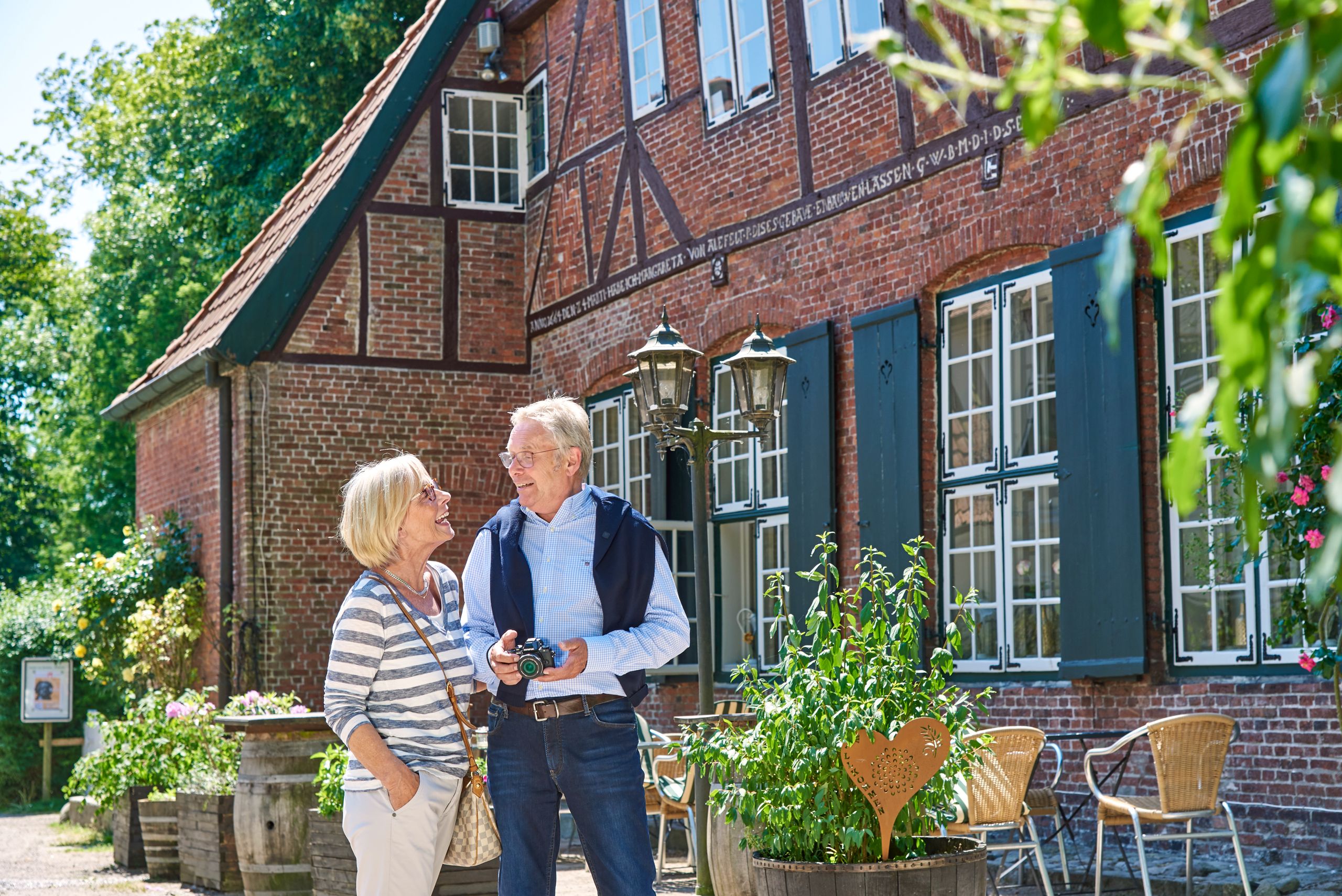
Uetersen monastery
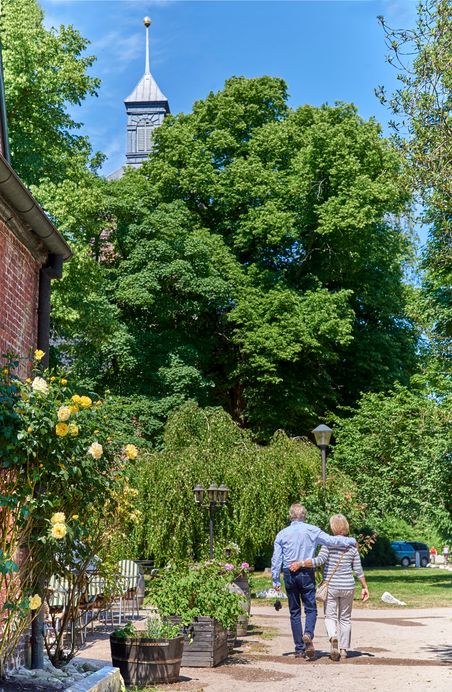
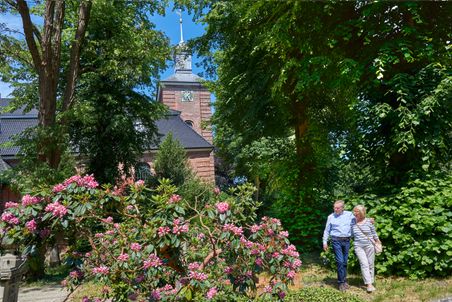
At the "uterst end" of the rule of the Knights of Barmstede, the former Cistercian convent was built around 1234, which was converted into a noble ladies' convent with the Reformation. The majority of the buildings, which are surrounded by old trees in the shadow of the high baroque church from 1749 around the ivy-covered cemetery, also date from this later phase.
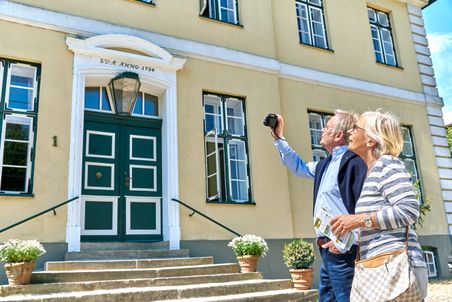
At the "uterst end" of the rule of the Knights of Barmstede, the former Cistercian convent was built around 1234, which was converted into a noble ladies' convent with the Reformation. The majority of the buildings, which are surrounded by old trees in the shadow of the high baroque church from 1749, also originate from this later phase and surround the ivy-covered cemetery. A neoclassical garden pavilion built in the late 18th century and overgrown snowdrops, winterlings, and elfin crocuses bear witness to the earlier gardens of the priory and monastery provosts. The monastery has lent a name to two roses. The strongly fragrant, filled peach-colored 'Augusta Luise' was baptized in honor of the Uetersen conventual and rose lover Augusta Louise Countess zu Stolberg-Stolberg (1753-1835), recipient of the most important letters of the young Goethe. The 'Uetersen Monastery Rose' recalls the symbolic power attributed to the rose by the Cistercians.
Tip: The Cäcilie Bleeker Park is Uetersen's former Old Cemetery from 1835. In today's park you will find a large variety of interesting conifers in addition to some old gravestones, including that of Cäcilie Bleeker, benefactress of the nearby Bleekerstift. Entrances: Bleeker- & Seminarstraße.