Monastery island
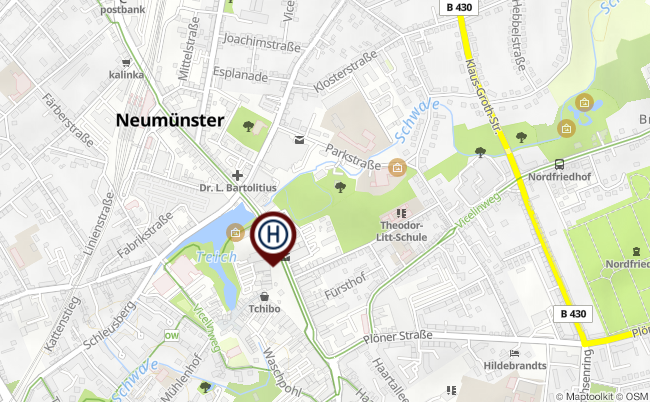
The monastery island in Neumünster's city center has a long and eventful history. It all began in 1498 with the establishment of a nunnery in the shelter of the Schwalebogen.
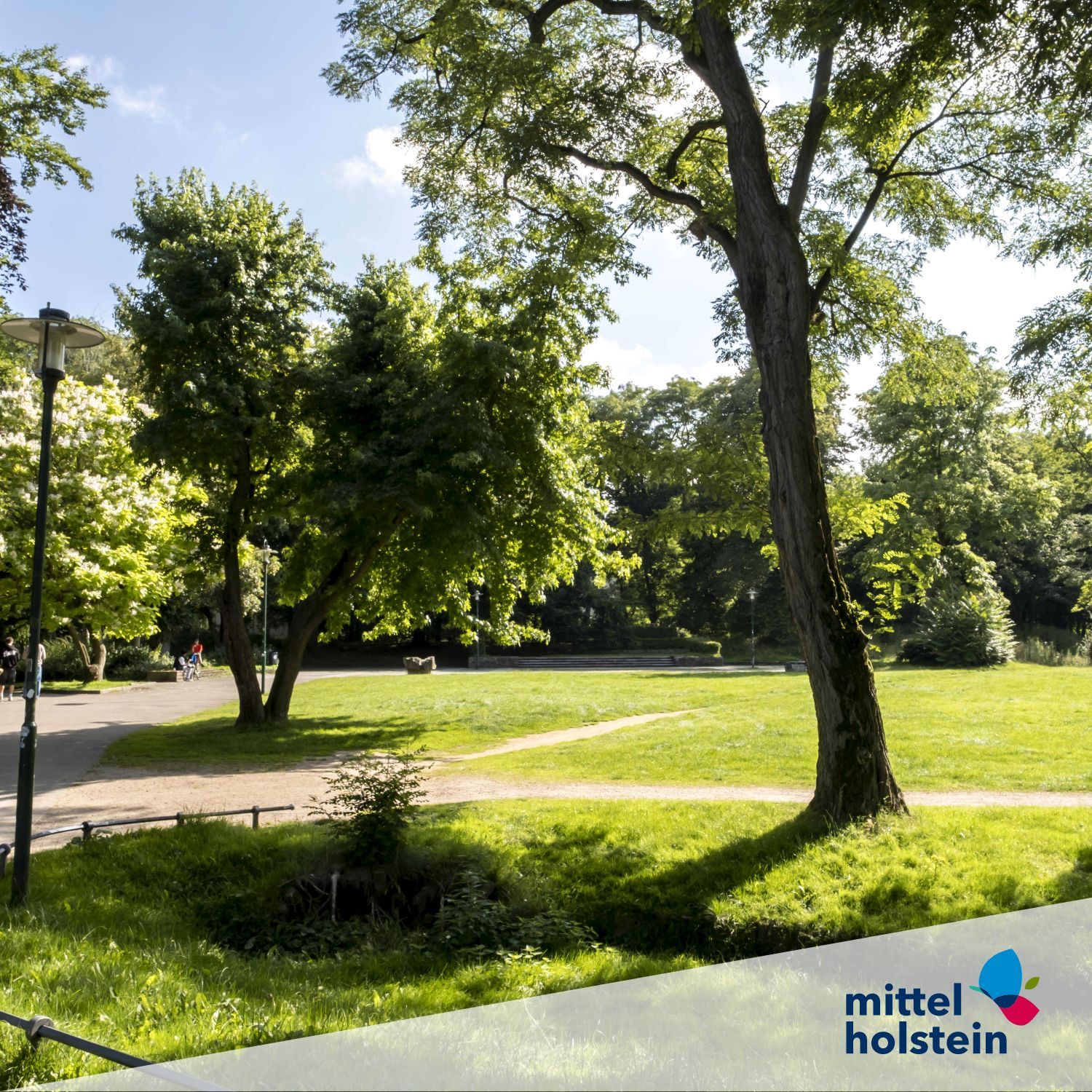
After the Reformation, the Augustinian convent was dissolved in 1566. Duke Adolf I of Schleswig-Holstein-Gottorf had the buildings belonging to the convent converted into a ducal, later princely house. In the years that followed, the buildings on the monastery island had various tasks and functions. Among other things, it served as the residence of the family of Schleswig-Holstein-Gottorf, as the seat of the magistrate and as a place of accommodation for prisoners as well as a penitentiary and madhouse. In 1760, the first "privileged wool factory" was established here. It was also used as a location for the Renck & Meßtorff cloth factory, the Brüning chrome tannery and the Weinknecht and Wehrenpfenning & Brüggen companies. The city of Neumünster acquired the monastery island in 1915 and had the remaining buildings of the former monastery demolished in 1933. After the Second World War, the island was transformed into a park-like green area, so that nothing of the original buildings can be seen today. Only the four corner bastions (ramparts), which separate the island from Rencks Park in the south-east, are still there. Nowadays, the monastery island - just like Rencks Park - is ideal for open-air events such as concerts.